
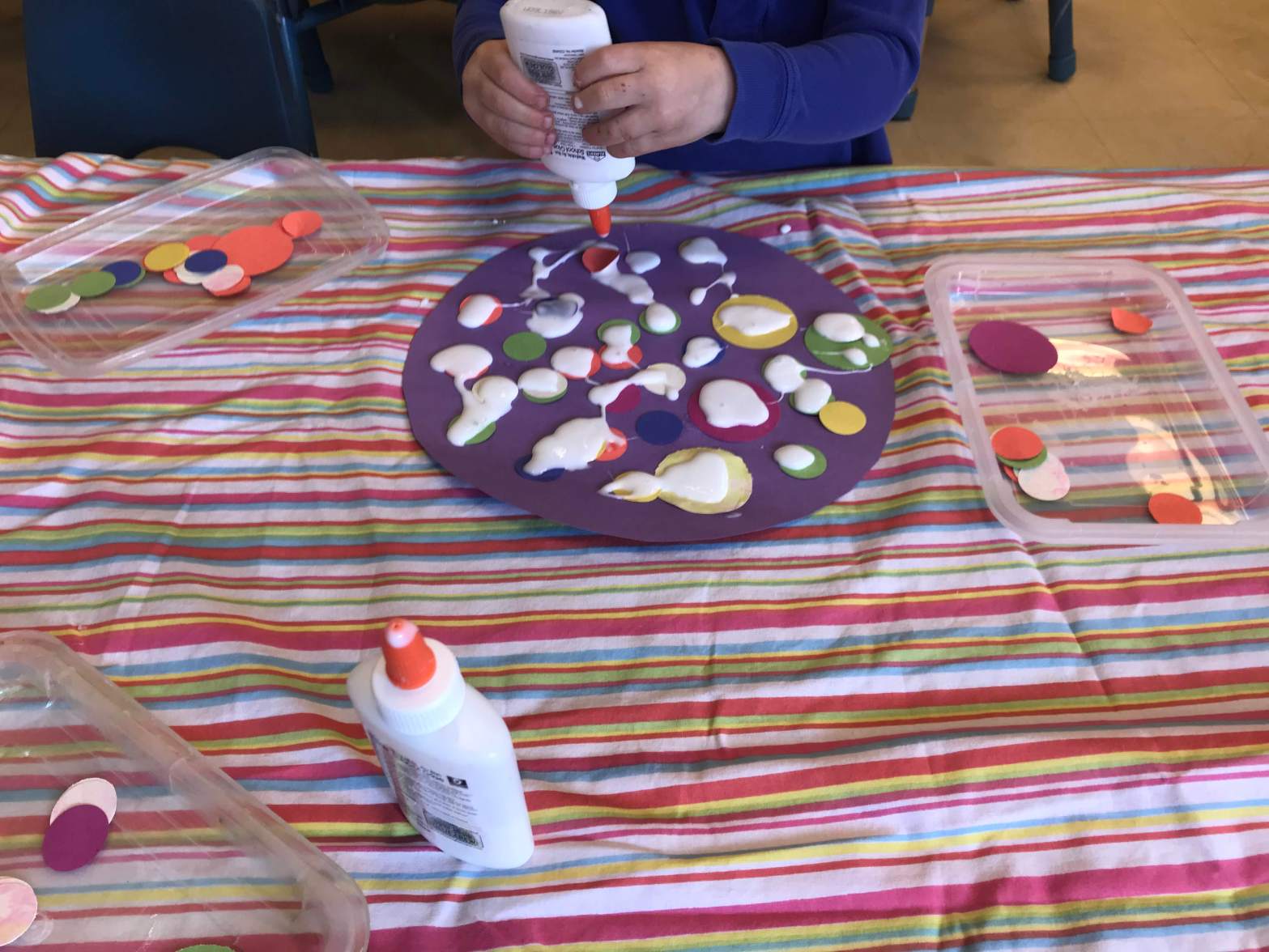
One of the things I enjoy the most about working with young children is providing them opportunities to engage in making and exploring art. For most adults, when we think about art, we tend to think about the outcome: a striking painting or sculpture that we see on a wall or in a museum. But for young children (and for artists of all ages), art is very much about the process of making the art.
For young preschoolers, aged two and three, art is very much about the process of moving materials around, exploring cause and effect, and feeling different textures, as well as learning how to use different art tools and implements. (For older preschoolers, the process is still the most valuable aspect of engaging in art, but four- and five-year-olds also have greater fine motor skills and a growing interest in the outcome — what it looks like.) When a young child engages with an art project, the benefit to the child is in exploring and moving things around, making choices about quantity and color (e.g., “I want a lot of blue!”, or placing collage items one-by-one vs. by the handful).
Art opportunities that are planned well for young children put them in the driver’s seat, letting them make it how they want to make it. This is why a project which is primarily about the representation — what it looks like — is not really appropriate for young preschoolers. Quality art projects for young children are designed with intention about how much structure and guidance the adult provides, and how much creativity and freedom the child exercises within the parameters of the project.
Some art projects are entirely open-ended, and just provide the art medium, such as paper and paint. Other art projects will provide more structure and guidance but retain open-ended aspects, such as making a collage in the shape of a shark with mixed materials placed wherever the child wants to. In this structured example, the adult provides a framework, and the child still exercises their creativity and exploration of materials within the framework of the project (ideally with the opportunity to exit the framework of the project if that is what the child is most interested in).
Providing children with freedom to use their creativity does not mean that absolutely anything goes — I generally do not allow children to fling paint around the room! (Although it would be fun to provide a structured situation, maybe outside and into a large box, to try out paint flinging on occasion!).
At the virtual summer camp, I will provide children opportunities to explore different art media (paint, glue, markers, paper, natural materials, chalk) while making their own creative choices. This is what makes for art exploration that children enjoy and benefit from engaging in.
 Play and Learn with Ms. Schaefer